
The Texas Gulf Coast will return to the national competitive fishing spotlight when the 2026 Yamaha Bassmaster Redfish Cup Championship presented by Skeeter arrives in Port Aransas on November 6–8, 2026.
The Bassmaster Redfish Cup Championship also highlights the wider sports culture in Texas, where major fishing tournaments attract dedicated audiences alongside football, basketball, and other competitive events. While anglers follow the action in Aransas Bay, some sports fans also explore information about trusted offshore sportsbooks for Texas residents to understand the broader sports entertainment landscape. However, offshore wagering platforms are not licensed or regulated by Texas authorities, making it important to distinguish fishing tournament coverage from gambling-related services and their legal considerations.
Organized by B.A.S.S., the three-day championship will bring accomplished inshore redfish anglers and competitors from the Bassmaster tournament circuit to one of Texas’ most established saltwater fishing destinations. The event will operate from Port Aransas Fisherman’s Wharf, with daily takeoffs scheduled for 6:45 a.m. Central Time and weigh-in activities beginning at 2:45 p.m.
Although the tournament is listed for Aransas Bay, the surrounding coastal fishing environment includes a much larger network of bays, seagrass flats, tidal channels, and shallow-water habitat. Those conditions make the Port Aransas region particularly demanding for competitors who must locate quality red drum while responding to changing tides, wind direction, water clarity, and fish movement.
The official Bassmaster Redfish Cup announcement confirms the November dates and marks another return to a destination that previously hosted the championship in 2021, 2022, and 2025.
For Texas anglers, the championship offers more than a professional fishing competition. It provides an opportunity to examine how experienced competitors approach fall redfish patterns, how the coastal environment influences tournament decisions, and why Port Aransas continues attracting major fishing events.
2026 Bassmaster Redfish Cup Championship Dates and Location
The 2026 championship is scheduled for Friday, November 6, through Sunday, November 8, in Port Aransas, Texas.
Port Aransas sits on Mustang Island near the entrance to Corpus Christi Bay, with access to Aransas Bay, the Gulf of Mexico, and the extensive inshore fishing grounds that make the middle Texas coast an important redfish destination.
The tournament’s primary operations will take place at Port Aransas Fisherman’s Wharf, where spectators can observe daily departures and afternoon weigh-in activities.
| Event Detail | Confirmed Information |
|---|---|
| Tournament | 2026 Yamaha Bassmaster Redfish Cup Championship presented by Skeeter |
| Dates | November 6–8, 2026 |
| Primary Location | Port Aransas, Texas |
| Listed Fishery | Aransas Bay |
| Tournament Headquarters | Port Aransas Fisherman’s Wharf |
| Daily Takeoff | 6:45 a.m. CT |
| Daily Weigh-In | 2:45 p.m. CT |
| Organizer | B.A.S.S. |
| Title Sponsor | Yamaha |
| Presenting Sponsor | Skeeter Boats |
These details are supported by the official Bassmaster tournament schedule and championship announcement.
B.A.S.S. initially stated that the qualified teams, complete competition format, and additional fan activities would be announced separately. Anglers and spectators should therefore check the organizer’s current tournament information before relying on previously used competition rules or assuming that every detail from the 2025 championship will carry over unchanged.
Why Aransas Bay Is a Premier Texas Redfish Destination
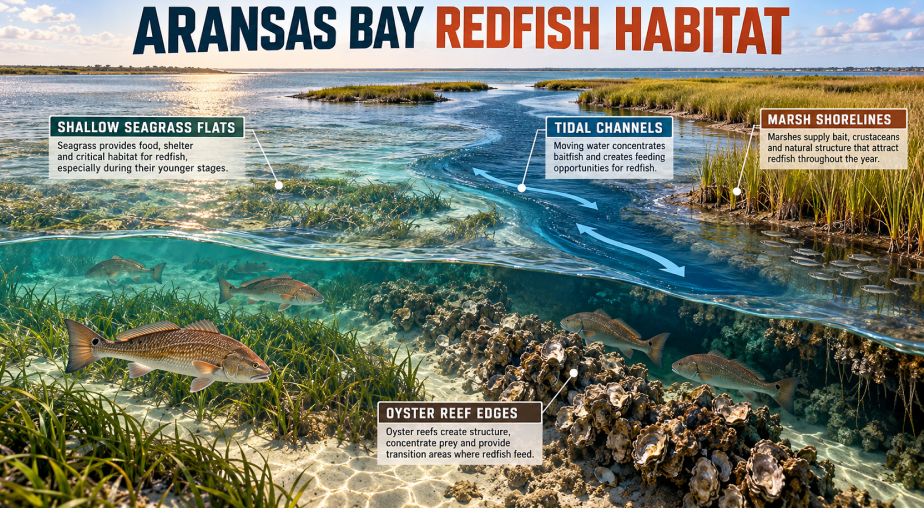
Aransas Bay is part of a productive coastal ecosystem where shallow flats, seagrass beds, oyster reefs, tidal passes, and shoreline structure create different feeding opportunities for red drum.
These features are especially important in competitive fishing because they require anglers to interpret environmental conditions rather than simply return to familiar locations.
Redfish frequently occupy shallow coastal waters, particularly areas where submerged vegetation provides shelter and access to prey. According to the Texas Parks and Wildlife Department’s red drum species profile, the species commonly uses shallow bay habitat with seagrasses, especially during its younger life stages.
The region also offers substantial habitat diversity within a relatively compact coastal area.
Anglers may encounter redfish along grassy shorelines, over sand pockets within seagrass beds, near oyster-shell transitions, or around tidal channels where water movement concentrates baitfish and crustaceans.
However, productive habitat does not guarantee productive fishing.
A location that holds feeding redfish during one tidal stage may become less effective when water levels, current, or wind conditions change.
This variability creates the central strategic challenge of the Bassmaster Redfish Cup Championship: finding fish is only the beginning. Competitors must also determine which fish are likely to be catchable, which areas can produce consistently, and when conditions justify relocating.
Port Aransas’ reputation extends beyond redfish alone. Its surrounding waters support speckled trout, flounder, and numerous offshore species, making the area a year-round destination for recreational and competitive anglers.
In 2025, the Texas Legislature designated Port Aransas the Fishing Capital of Texas, formally recognizing the community’s fishing heritage and significance to coastal recreation.
How Tides, Wind, and Water Clarity Could Shape the Championship
November fishing on the Texas coast introduces several variables that can influence both redfish movement and tournament strategy.
Tidal movement is one of the most important.
Incoming tides can allow redfish to access shallow feeding areas, while falling water may concentrate fish near channels, drains, and deeper edges.
Anglers who understand how these changes affect specific shorelines can adjust their approach throughout the day.
Wind creates another layer of complexity.
Strong winds can reduce visibility on exposed flats, complicate boat positioning, and change where baitfish accumulate. In some locations, wind-driven water movement can improve feeding opportunities; in others, it can make sight-fishing substantially more difficult.
Water clarity also influences lure selection and presentation.
Clear conditions may favor precise casts and more subtle presentations, while stained water can make vibration, lure visibility, and careful coverage of likely holding areas more important.
Temperature changes add further uncertainty.
Late-autumn weather can produce meaningful shifts in shallow-water temperatures, particularly when northern cold fronts reach the coast.
Those changes may influence whether redfish remain on exposed flats, move toward deeper water, or concentrate along protected shorelines.
For tournament competitors, success will depend on recognizing which conditions matter most on a particular day rather than following a rigid fishing plan.
That ability to adapt is one reason the Redfish Cup is a compelling event for recreational anglers to study.
What the 2025 Championship Reveals About Competitive Redfish Fishing
The 2025 Bassmaster Redfish Cup Championship provides useful context for understanding what competitors may face in November 2026.
Last year’s event took place in Port Aransas from November 7–9 and featured 10 two-person teams. Six teams consisted of experienced redfish competitors, while four paired Bassmaster Elite Series anglers with redfish specialists.
The competition used a catch-weigh-release format, allowing teams to record two qualifying redfish per day within the 20- to 28-inch Texas slot limit. Cumulative weights determined the final standings.
Tony Vercillo and Kristian Frost won the 2025 championship, finishing with a three-day total of 41 pounds, 1 ounce.
Easton Fothergill and Clark Jordan Jr. finished second with 36 pounds, 9 ounces, demonstrating how narrow the difference between a championship-winning performance and a strong runner-up result can be.
The official 2025 Bassmaster Redfish Cup results document those final weights and provide a useful historical comparison.
The previous championship also illustrated the importance of combining local saltwater knowledge with broader competitive fishing experience.
Fothergill, a Bassmaster Classic champion, competed alongside Jordan, an experienced Texas redfish angler. Their partnership highlighted how skills developed in freshwater bass tournaments can transfer to coastal competition, although adjustments are necessary.
Reading fish behavior, making accurate casts, managing equipment, and maintaining composure are transferable skills.
However, tidal movement, saltwater habitat, and the behavior of red drum introduce different tactical considerations.
That combination of fishing backgrounds has become one of the championship’s distinctive features.
The 2025 format and results provide historical context, but they should not be interpreted as confirmation of the 2026 field, prize structure, or scoring rules.
Redfish Techniques Texas Anglers Can Learn From Tournament Professionals
Professional redfish tournaments offer practical lessons for anglers who fish Aransas Bay, Corpus Christi Bay, and surrounding coastal waters.
One of the most important is the value of identifying productive habitat before selecting a lure.
Anglers frequently begin by looking for combinations of seagrass, sand openings, shoreline transitions, and moving water. These features can help concentrate prey and create feeding opportunities.
Sight-fishing is particularly effective when visibility permits.
Competitors may scan shallow flats for wakes, moving shadows, tailing fish, or disturbances that indicate redfish feeding near the bottom.
However, successful sight-fishing requires accurate casting and careful boat positioning. Approaching too quickly or casting directly onto a fish can cause it to move away before taking the lure.
Artificial lures commonly used in coastal redfish fishing include soft-plastic paddletails, shrimp imitations, spoons, and topwater presentations.
Their effectiveness depends on conditions.
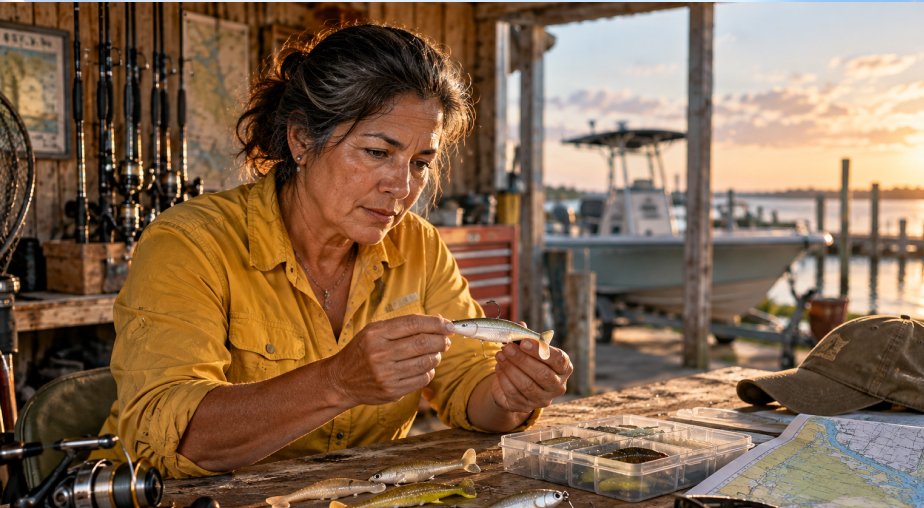
A paddletail retrieved above submerged grass may be productive when redfish are actively feeding, while a slower presentation near structure may be more appropriate when fish are less aggressive.
In its analysis of the 2025 championship, Bassmaster highlighted how competitors adapted their lure presentation and retrieve speed to different conditions.
For example, Easton Fothergill adjusted his paddletail retrieve to keep the lure above vegetation, an approach that helped him apply his freshwater fishing experience to the Texas coastal environment.
These examples appear in Bassmaster’s Redfish Cup fishing lessons.
The broader lesson is that lure selection should follow an assessment of habitat and fish behavior.
Successful anglers make adjustments based on what they observe rather than assuming that one technique will remain effective throughout the day.
Texas Redfish Regulations and Responsible Fishing Practices
The championship also brings attention to the importance of redfish conservation and responsible fishing practices.
Texas maintains specific recreational regulations designed to protect red drum populations while preserving fishing opportunities.
Under regulations effective September 1, 2026, through August 31, 2027, the standard recreational red drum daily bag limit is three fish per angler, with a minimum length of 20 inches and a maximum length of 28 inches.
Additional provisions govern the retention of oversized red drum through the state’s tagging system.
| Regulation | Texas Recreational Red Drum Rules |
|---|---|
| Daily Bag Limit | 3 red drum |
| Minimum Length | 20 inches |
| Maximum Length | 28 inches |
| Oversized Fish | Special red drum tagging provisions apply |
| License Requirement | Appropriate Texas fishing license and saltwater endorsement, unless exempt |
The official TPWD red drum regulations provide the applicable limits and tagging requirements.
Tournament-specific rules can differ from recreational harvest limits, particularly when organizers use catch-weigh-release procedures. Competitors must follow the rules established for their event as well as applicable state law.
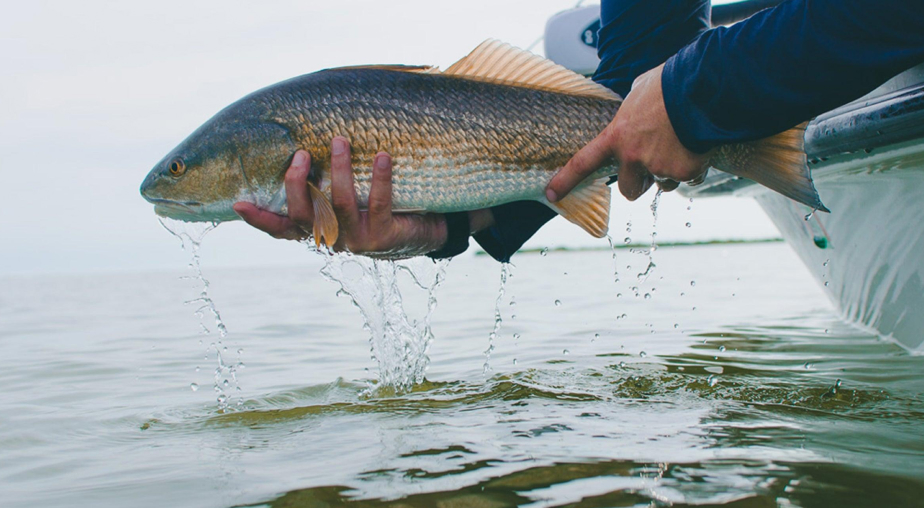
Responsible handling is especially important when fish are released.
Minimizing unnecessary air exposure, using appropriate landing equipment, avoiding damage to gills, and returning fish promptly to the water can reduce handling stress.
Tournament organizers also have an opportunity to demonstrate conservation-minded practices to a wider audience.
For recreational anglers, the championship provides a reminder that a productive fishery depends on habitat protection, regulatory compliance, and responsible treatment of released fish.
What Spectators Should Know Before Visiting Port Aransas
For fishing enthusiasts planning to attend the championship, Port Aransas Fisherman’s Wharf will serve as the central event location.
The venue is located at 900 Tarpon Street, Port Aransas, Texas, near the waterfront and the community’s fishing-related businesses.
Daily takeoffs are scheduled for 6:45 a.m. Central Time, providing an opportunity to observe teams preparing their boats and departing for competition.
Afternoon weigh-ins are scheduled to begin at 2:45 p.m., when spectators can follow the day’s results and see how the leaderboard develops.
The three-day schedule gives visitors multiple opportunities to experience the event.
Nov 6
Friday
Opening Competition Day
Teams begin the championship and establish the initial standings.
Nov 7
Saturday
Second Competition Day
Anglers adjust to changing conditions as the cumulative standings develop.
Nov 8
Sunday
Championship Finale
The final competition day determines the championship standings.
Visitors should verify current parking arrangements, public access, and any additional fan activities through the tournament organizer before traveling.
Those planning to fish independently during the weekend should also account for increased boat traffic near tournament operations and respect navigational rules around crowded waterfront areas.
The championship may attract visitors interested in exploring Port Aransas’ broader fishing culture, including local tackle shops, charter services, marinas, and waterfront businesses.
Why the Redfish Cup Matters to Port Aransas and Texas Coastal Fishing
Major fishing tournaments contribute to the visibility of host communities by bringing competitors, support crews, media personnel, and spectators into local fishing destinations.
For Port Aransas, the Redfish Cup reinforces an identity closely connected to recreational angling and marine tourism.
The community’s designation as the Fishing Capital of Texas provides an additional point of recognition, but its reputation ultimately rests on the accessibility and diversity of the surrounding fisheries.
The championship offers national exposure to local fishing conditions, coastal habitats, and the skills required to compete successfully in Texas waters.
It also creates opportunities for anglers who primarily follow freshwater bass tournaments to learn more about saltwater competition.
The participation of Bassmaster Elite Series competitors alongside experienced redfish anglers helps connect those audiences.
That crossover is significant because it demonstrates how competitive fishing continues to evolve beyond individual species or regional tournament circuits.
For local businesses, the event provides an opportunity to welcome visitors during the fall fishing season. However, the organizer has not published a verified economic-impact estimate for the 2026 championship, so any specific claims about projected visitor spending or revenue would be premature.
What to Watch During the November 6–8 Championship
The most compelling storyline heading into the 2026 Bassmaster Redfish Cup Championship is how competing teams will respond to the conditions they encounter around Port Aransas.
Late-autumn tides, wind patterns, shallow-water temperatures, and fish location could all influence the standings.
The opening day should reveal which approaches are producing results, but early success will not necessarily guarantee a championship.
Teams that locate quality fish on Friday may need to make significant adjustments if conditions change on Saturday or Sunday.
The 2025 championship demonstrated how important cumulative performance can be. A single productive day can create a meaningful advantage, but maintaining that performance across three days is the larger challenge.
Texas anglers following the event should pay particular attention to how professionals interpret habitat, choose productive fishing areas, and adapt their presentations.
Those decisions may provide more lasting value than any individual catch.
The November 6–8 Redfish Cup Championship will showcase the competitive potential of Aransas Bay and the surrounding Texas coastal waters while offering a closer look at the techniques and environmental knowledge that define successful redfish fishing.
For Port Aransas, it represents another opportunity to demonstrate why the Texas Gulf Coast remains a major destination for serious saltwater anglers.