
The November 26, 2026, fishing report for South Padre Island gave redfish anglers a clear decision: start with the incoming tide, but keep deeper water within reach if the shallows show little bait or activity. The Brazos Santiago station recorded 63.9°F water at 4:30 a.m., and the tide forecast called for about 2 feet of rise during the main daylight window. Early north-northwest wind was around 12 knots with gusts to 14, making visibility another consideration for anyone hoping to sight-fish. Those readings made a case for checking flats with nearby depth rather than committing the whole trip to skinny water. The report documented conditions, not catches.
What the Tide Meant for South Padre Island Redfish
The South Padre and Port Isabel conditions report put the main daylight rise on November 26 at roughly 9:59 a.m. to 5:37 p.m., with about 2 feet of change. It showed the full incoming tide continuing until about 8:38 p.m. for a total rise of roughly 2.5 feet. Those were two descriptions of the same rise, not two separate feeding windows. For a daylight trip, the first figure mattered more because it described the water movement anglers could use while they could still read the flats. The later high did not make the evening the better choice for everyone.
Reading the South Padre Island Tide Window
A broad incoming window gave anglers room to watch whether water actually reached the grass or sand they planned to fish. The useful check was at the spot itself: whether water was moving across the edge, whether bait showed there, and whether the angler could make a controlled presentation. A grass line with visible bait deserved a closer look than a flat picked only because the chart showed a rising tide. The 2-foot figure described the forecast change, not the depth over any particular piece of grass. That distinction mattered for anyone picking a shoreline or deciding how shallow to start.
The temperature reading gave anglers a second reason not to equate rising water with a guaranteed shallow bite. The island beach fishing report provided context for why water near 64°F was still workable for redfish even though it was cooler than their preferred range. The measured 63.9°F came from one station before daylight, not from a survey of every Lower Laguna Madre flat or depression. It made sense to give an incoming flat a look without treating the station reading as proof that fish had moved onto it. If the shallow edge showed little bait or fish activity, the next check was nearby depth.
Where to Start in Lower Laguna Madre
The east-side shoreline and nearshore flats offered a starting point because earlier South Padre Island reporting described steadier salinity and more consistent redfish there than in the west-side back bays. That comparison came from September 2026 reporting, so it was a reference for choosing where to start, not a November 26 measurement of either shoreline. Port Isabel airport recorded about 0.51 inches of rain over the preceding 72 hours, but an airport rain total cannot tell an angler how much freshwater reached a particular pocket. The west side was not ruled out. It simply called for checking water color, movement, and bait rather than assuming conditions matched the east side.
From Grass Edges to Deeper Water
Earlier regional reporting identified deeper holes and water in the 3- to 8-foot range as alternatives to shallow zones. That range was useful for choosing a backup spot, but it was not a confirmed holding depth for redfish on November 26. Pairing a shallow starting area with an adjacent hole let an angler test two depths without changing shorelines at the first quiet stretch. The same approach worked as a search plan around a grass edge with deeper water nearby. What mattered was being able to shift the presentation down when the shallows gave no reason to stay.
Wind made the choice about more than depth. A wind-blown point, marsh drain, or grass line was worth checking if moving water and bait gave it a reason to hold fish, even if the surface was too broken to spot individual reds. That is different from working an open flat where the plan depends on seeing fish before casting. Wind was forecast to ease in the afternoon, but there was no confirmation in the report that it did. The better cue for switching to sight-fishing was a visible improvement at the spot, not the clock or the forecast alone.
| Water to Check | What Made It Worth a Cast | Reason to Switch |
|---|---|---|
| Shallow grass or sand flat | Incoming water and visible bait | Poor visibility or little activity |
| Grass line, drain, or point | Flow or bait along a defined edge | No useful movement along the edge |
| Nearby hole or 3- to 8-foot water | A deeper check after a quiet flat | Bait or fish activity returns to the shallows |
Matching Bait and Lures to the Water
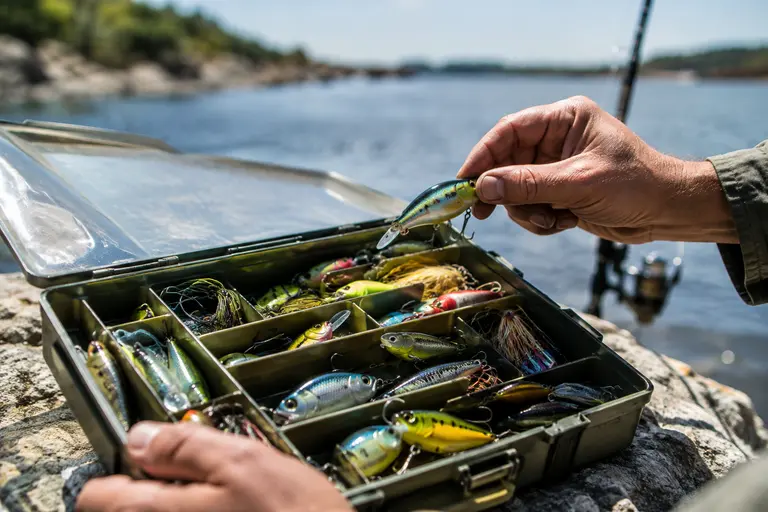
Live shrimp under a popping cork was an established Lower Laguna Madre option in the regional reporting. It fit a plan built around letting the bait work along a grass line or other defined edge rather than making repeated casts to the middle of a flat. The question was whether the cork could follow the stretch the angler wanted to fish without being swept off it. If the drift missed the target, changing position or cast angle was a more useful first adjustment than changing bait. The November 26 notes did not include a bait-by-bait catch tally.
Soft plastics, paddle tails, and weedless gold spoons were also mentioned in earlier local reporting, including around sand flats and east-side water-color changes. A paddle tail gave anglers another way to check an edge or the deeper water beside it, while a weedless spoon offered a different presentation around grass. The choice was whether to work a defined line, cover a stretch of flat, or make a deeper pass. Trying to answer all three questions with the same retrieve would make it harder to tell what changed. For more on presentation choices across Texas estuaries, see our Texas bay fishing tactics.
On South Padre Island, the early wind reading made it worth distinguishing water that was hard to see into from water with no visible bait activity. A color change could provide a casting reference even when chop made sight-fishing difficult, but it was not evidence of a school by itself. Working a short stretch with one presentation before changing depth or position gave the angler a better way to judge the water. If a second pass produced no sign of bait or fish, there was little reason to keep rotating through lures in the same place. Switching to an adjacent edge or hole tested a different part of the bay.
What the November 26 Redfish Report Can Tell Anglers
The November 26 report described a favorable setup for making a redfish trip, not a verified strong bite. A long daylight rise, early winds around 12 knots, and a station reading near 64°F gave anglers concrete reasons to check the flats and their edges. None of those readings established how many fish were caught, where a school settled, or whether trout outnumbered redfish in anglers’ catches. The distinction matters when anglers share a report at the ramp or pass it along to a fishing partner. A useful account separates what the gauge recorded from what someone actually saw or caught on the water.
For a trip close to shore, that distinction also helps settle what to do when the first stop falls short. A starting stretch with both a flat and nearby depth gives an angler more to test than a flat picked solely for a tide time. If the wind keeps bait and fish out of view, the next check can be a defined edge where water movement is easier to read. If an edge stays quiet, the deeper option is a change in fishing depth rather than another cast into the same water. For coverage beyond fishing, Scar Sports is a related site in our network.
The most useful lesson from South Padre Island on November 26 was to use the tide chart to set the fishing window and let the water at the spot dictate the first cast. The daylight rise was the clearest reason to test shallow grass or sand, while the cooler station reading made a nearby hole worth keeping in the plan. Wind and visibility determined whether an angler could look for individual fish or needed to work an edge by casting. Earlier east-side and west-side reports offered a starting point, not a substitute for what anglers saw that day. That is what makes the report useful without turning a favorable forecast into a catch claim.