
Texas coast fishing on November 26, 2026, called for two separate decisions: where to look for fish and what could go in the cooler. November guide reports from the Bolivar Peninsula and Port Aransas regularly included redfish and speckled trout, while reports from Corpus Christi and Port Aransas pointed to black drum schooling in channels. Offshore, the private recreational red snapper season in federal waters off Texas had already closed on November 20, 2026. For bay anglers, the choice was less about picking one reliable species and more about matching the first stop to water temperature, wind and the depth of nearby cover.
How Texas coast fishing Changed With Cooler Water
November 2026 reports put water temperatures around 68°F on parts of the upper Texas coast. That was a local reading, not a working temperature for every bay from Crystal Beach to Corpus Christi. The reports pointed to trout using deeper basins as water cooled and redfish gathering near grass edges, drains and windblown points. For a crew choosing its first stop, the useful detail is the mix of water nearby: a shallow edge gives you a redfish option, while a drop into a basin gives you a second depth to check without committing to a long run.
Trout also showed up over shallow flats, shell bottoms and mixed shell and mud, with reports pointing to late morning or the hours after the warmest part of the day as productive windows. That shallow bite does not contradict the reports from deeper basins. It gives anglers two patterns to test instead of one depth to fish all day. If a shallow shell edge produces no contacts, try the deeper side before abandoning the area; if the deeper water is quiet, the nearby flat gives you a place to check again after the day warms.
A Texas coast fishing Plan for Channel Edges
Black drum offered a different starting point in the Coastal Bend. November 2026 reports described schools in channels around Corpus Christi and Port Aransas, with black drum, redfish and speckled trout also turning up in protected water. For a trip built around drum, start by checking the deeper water along a channel edge instead of treating the full channel as one spot. Live shrimp is a practical first bait based on the November catches, and a shorter stretch with repeated bites gives the crew more reason to stay than a single bite followed by a long quiet drift.
Redfish appeared in every report in the November sample from around Crystal Beach and Port Aransas, and speckled trout appeared in most of them. Those reports help set the order of a search, but they do not measure catch rates across either area or tell you which drain will produce on a given outing. Start with the habitat the reports consistently point to, then let the bites decide whether to stay. A familiar shoreline with no bait or fish activity does not deserve more time simply because it produced on a previous trip.
Matching Bait and Lures to the Bite Window
Some November reports described the strongest action just after dawn, particularly on cool, overcast or calm mornings. Topwaters and subtle presentations figured in those early bites, while soft plastics were the reported choice from midmorning into the afternoon. That is a useful sequence to try, not a reason to put away a productive lure because the clock says so. If a topwater draws no response where you expected one, work the same edge below the surface with a small plastic before deciding the fish are somewhere else.
Early Surface Action and Later Trout Water
For trout over shell or mixed shell and mud, the reports favored smaller plastics, paddle tails and jerkbaits, including presentations under a popping cork. Keep the first change simple: try a different presentation over the same stretch, or keep the lure and move from the flat to the deeper edge. Changing both at once makes it harder to tell whether the location or the lure made the difference. On a shared boat, partners can fish the shallow and deep sides of the same break, then compare where the first touches came from before moving.
Live shrimp and mullet were common threads in the reports that included redfish and black drum, with finger mullet also listed as an option. For a mixed bag, shrimp gives the crew a starting bait that fits both targets. Gulls, terns and wading birds can point toward bait or feeding activity, but birds alone do not identify what is feeding below them. Use that activity to narrow the search, then judge the water by what the crew finds along the edge rather than assuming every group of birds marks a trout school.
Which Fish Could Go in the Cooler
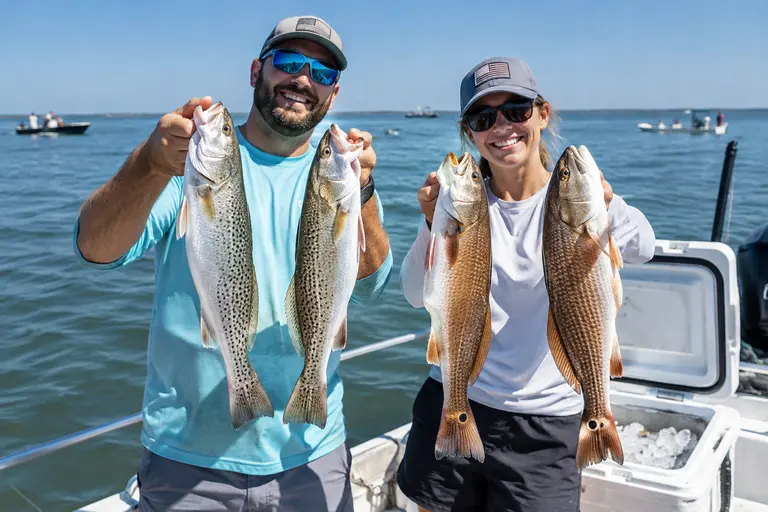
The Texas Parks and Wildlife closure notice set the private recreational red snapper cutoff in federal waters off Texas at 11:59 p.m. on November 20, 2026. The closure remained in effect through December 31, 2026, while red snapper harvest in Texas state waters, which extend up to nine nautical miles offshore, remained available under state limits. For Texas coast fishing plans that include snapper, check where the boat will actually fish before making harvest part of the trip. Leaving from a Texas port does not answer whether the fishing grounds are in state or federal waters.
A booking on a charter or headboat did not put anglers on the same federal schedule as a private recreational trip. The NOAA Fisheries for-hire bulletin listed a June 1, 2026, opening and an October 26, 2026, closure for the federal for-hire season. That closure came before the November 20 cutoff for the private sector off Texas. Ask the operator which waters and species the trip will cover before booking rather than reading either federal season date as a promise about what the boat can keep.
| Fishery | Harvest Status on November 26, 2026 |
|---|---|
| Federal red snapper off Texas, private recreational | Closed at 11:59 p.m. on November 20; closure through December 31, 2026 |
| Federal red snapper, for-hire | Closed on October 26, 2026 |
| Texas state-water red snapper | Harvest available under state limits |
| Southern flounder, statewide | Catch and release only from November 1 through December 14, 2026 |
Southern flounder offered a separate reminder that a species can show up in the catch without being available for harvest. The statewide closure ran from November 1 through December 14, 2026, so a flounder caught while working a drain or shell edge on November 26 had to go back. Tell everyone aboard before the first cast, especially if the crew is switching between baits and habitats for several species. The two federal snapper dates and the statewide flounder dates answer different questions; none is a shortcut for the others.
A Late November Plan From Bolivar to the Coastal Bend
On a windy day, make the backup part of the plan before leaving the dock. The November reports favored protected bays, channels and marshes for shelter and more consistent action than exposed surf or passes during winds and cold fronts. That does not rule out every windblown point; a point inside a protected bay can still be worth testing without building the whole trip around exposed water. For crews weighing a sheltered redfish trip, these winter redfish tactics are a related read.
Keep the destination tied to the strength of the report. Bolivar near Crystal Beach and Port Aransas had repeated reports of redfish and trout, while Corpus Christi and Port Aransas had the specific channel-school reports for black drum. The South Texas seasonal report put tarpon around through roughly Thanksgiving before they typically headed south, which is a seasonal reference, not a verified last sighting for November 2026. For a group deciding what to rig first, the reported bay catches give a firmer starting point than treating a holiday date as a forecast for a migratory fish.
Good Texas coast fishing notes are worth sharing with the next crew: name the area, describe the depth and bottom, and say whether the bites came at dawn or later over shell. A report that distinguishes a protected channel edge from an exposed pass gives another angler a better starting point than a tally alone. For readers who follow other local sports, SportsWireNews offers insights into related athletic events. On the water, keep the handoff just as practical: identify the first stop, agree on the sheltered alternative, and make sure everyone knows which fish have to go back.