
ADA fishing access at Galveston Island State Park took a clear step forward on September 26, 2026, when nearly 20 union tradeswomen from around Texas installed a new ADA-accessible fishing dock at the park’s freshwater pond. For anglers who care about access as much as the bite, this was more than a park improvement. It changed how people can fish a pond that had been limited to shoreline access and gave the Galveston fishing community another example of trades, conservation groups, and public recreation meeting at the water’s edge.
Why ADA fishing access Matters At Galveston
Galveston Island State Park is a practical place to talk about fishing access because it serves many kinds of anglers. Some visitors come with surf rods and saltwater plans. Others bring kids, cane poles, spinning tackle, or a simple goal: catch a few freshwater fish from a safe, reachable spot. As a redfish angler, I usually judge a fishing site by tide, bait, wind, and current. At this pond, the bigger question is whether every angler can reach fishable water in the first place.
The September 26 Dock Build
The new dock was installed during a Tradeswomen Volunteer Weekend organized by the Union Sportsmen’s Alliance. The project brought together tradeswomen from sheet metal, electrical, pipefitting, ironworking, and other union fields, with some volunteers traveling from far across Texas. That matters in a fishing culture where access work often depends on people who know how to build durable public-use facilities, not just people who know how to fish.
The dock itself is an AccuDock floating dock. It was purchased with proceeds from the Union Sportsmen’s Alliance Gulf Coast Conservation Dinner. The stated purpose was to improve access to fishing for catfish, bass, and sunfish in the park’s freshwater pond. Before the installation, anglers were limited to fishing from the shoreline, which can restrict casting angles, landing space, and comfort for people with mobility needs.
ADA fishing access In A Freshwater Pond Setting
Freshwater pond fishing may not carry the same drama as a bull red run on the beachfront, but it is often where families, new anglers, and returning anglers build confidence. A floating dock can give anglers a defined platform, a closer reach to deeper water, and a safer setting for watching a bobber or working a small lure. That is ADA fishing access in its most useful form: not a slogan, but a built feature that changes the way a real fishing spot can be used.
What The New Dock Changes For Anglers
The freshwater pond’s target species are catfish, bass, and sunfish. Those are approachable fish for beginners, but they still reward timing and presentation. Catfish anglers can set up with bait and wait for a steady bite. Bass anglers can work small artificials near edges and cover. Sunfish can keep young anglers engaged because they often respond to simple bait and light tackle. Better access does not guarantee fish, but it gives more anglers a fairer shot at making a clean cast and managing a catch.
From Shoreline Limits To A Floating Platform
Shoreline-only fishing can work well at some ponds, yet it also creates limits. Bank slope, mud, vegetation, crowding, and uneven ground can make a trip difficult before a line ever hits the water. A floating dock changes the setup by creating a shared access point. For anglers using mobility devices or fishing with family members who need steadier footing, that can make the difference between watching from a distance and taking part.
From a sports angle, this is venue improvement at a local level. Fishing sites are not stadiums, but they still have access points, traffic flow, usable space, and participant experience. A dock installation is a small infrastructure move with direct impact on who gets to participate.
Freshwater Species And Family Fishing
Catfish, bass, and sunfish also make sense for community fishing. They support short trips, beginner instruction, and low-pressure outings. A pond setting can help anglers learn casting control, hook removal, bait selection, and fish handling without the added variables of surf, tide, or boat traffic. For families visiting the park, the dock adds another fishing option alongside the coastal setting that gives Galveston Island State Park its identity.
Those interested in broader outdoor access initiatives can discover related stories at Back2Tap, which explores how community involvement and recreational opportunities align with strategic planning favored by anglers.
How ADA fishing access Fits Wider Park Work
The dock did not arrive in isolation. Galveston Island State Park has already been through major public-access work. The park spans roughly 2,000 acres, with bayside and beachside sections, and its redevelopment was completed in May 2023 with $24 million in upgrades, including about $10.6 million from Texas Trustee Implementation Group funds. The project included new campsites, beach-side amenities, boardwalks, restroom and shower facilities, group pavilions, and kayak launch sites, according to Gulf Spill Restoration.
2023 Redevelopment Set The Base
For anglers, that redevelopment matters because fishing access depends on more than a dock or launch. Parking, restrooms, showers, boardwalks, and kayak launch sites all shape whether a fishing trip is realistic. A parent taking a child to fish, a paddler planning a bay outing, or an angler with mobility needs all depend on the same basic pieces: safe arrival, usable facilities, and access routes that match the activity.
That is why the September 26 dock initiative fits the larger park pattern. The 2023 work improved the park’s visitor framework. The dock added a fishing-specific piece at the freshwater pond, where a targeted change can be felt every time an angler sets up on the platform.
On-Site Access Details
Texas Parks and Wildlife Department lists several accessibility features at Galveston Island State Park, including day-use and campsite restrooms with accessible parking, paved sidewalks, grab bars, fold-down shower seats, and hand-held shower heads. TPWD also states that the park loans four beach wheelchairs from headquarters for sandy areas, but they are not self-propelled and require a companion, according to the park’s accessibility information.
Those details are worth spelling out because fishing trips depend on the whole day, not only the spot where a line is cast. An accessible dock helps at the water. Accessible restrooms, paths, and parking help before and after the bite. For anglers who plan around physical access, every piece of that chain matters.
State Programs And Local Access Momentum
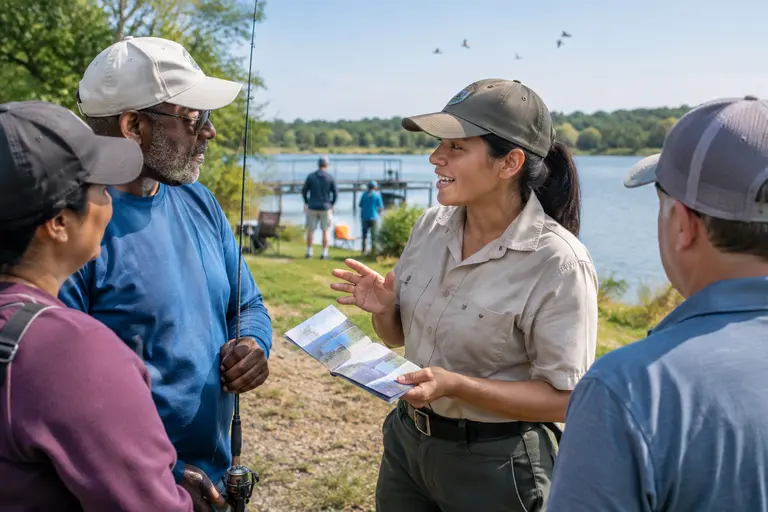
Texas fishing access work is also being shaped by state-level programs. Under Texas Parks and Wildlife Department’s Habitat and Angler Access Program, proposals are being accepted through December 31, 2027, for fiscal years 2028-29. Eligible projects include development or improvement of fishing piers and shoreline access enhancements. For readers following funding paths across the state, our report on Texas fishing access explains how HAAP can connect habitat work with better places to fish.
HAAP Opens A Longer Runway
The Galveston pond dock was not listed in the research as a HAAP project, so it should not be described that way. Still, the timing shows a shared direction in Texas recreation: better bank access, better pier access, and more fishing sites designed for a wider range of anglers. Programs that support piers and shoreline improvements can help local partners turn access needs into buildable projects.
The Texas General Land Office’s Coastal Management Program has also provided more ADA-access equipment to Galveston, according to the research notes: three beach wheelchairs to the Galveston Park Board of Trustees and one beach wheelchair to the City of Galveston. Those beach wheelchairs are separate from the pond dock, but they point to the same access conversation along the island.
Community Labor Counts
The tradeswomen who built the dock gave this project a strong community stamp. In fishing, we talk a lot about spots, tides, fish movement, and bait. Access work reminds us that people build the places where those fishing stories happen. The labor behind a dock can become part of the local fishing culture, especially when the project helps anglers who previously had fewer practical options at that pond.
There is also a teaching value here. Young anglers who see skilled tradeswomen building a fishing dock get a clear look at how outdoor access is created. It is not abstract. It is materials, tools, time, and people deciding that a public fishing site should serve more users.
Galveston Island State Park Dock Initiative
What Anglers Can Take From The Build
The Galveston Island State Park dock initiative should be judged by its direct fishing impact: a freshwater pond that once offered shoreline-only fishing now has an ADA-accessible floating dock for anglers targeting catfish, bass, and sunfish. That is a concrete gain for participation, especially for families and anglers who need a more reachable platform.
For the Galveston fishing community, ADA fishing access now has a new on-the-ground example inside one of the island’s key public parks. It connects volunteer labor, conservation funding, park infrastructure, and the simple joy of getting a bait in the water. From my seat as an angler, that is the kind of development that keeps local fishing open to more people, one castable edge at a time.