
The FAA Ground Stop on Friday, November 13, 2026, turned a packed Texas sports weekend into a travel management test for teams, fans, officials, and venue staffs. Flights were grounded, college football itineraries tightened, Houston airports backed up, and several programs had to change how they reached game sites. By November 19, 2026, the affected games had already been played or rescheduled, so the clearest story is not a preview. It is a recap of how quickly air travel can affect competition windows, fan plans, and event operations across Texas sports.
How The FAA Ground Stop Hit Texas Travel
FAA Ground Stop Timing And The Sports Calendar
The nationwide order was issued on Friday, November 13, 2026, after a communications failure affected multiple Air Route Traffic Control Centers. The shutdown grounded inbound flights for several hours, and officials said there was no indication at that point that the outage was a nefarious attack, according to TechRadar’s outage report.
The timing mattered because Friday is a key movement day in college sports. Teams often fly the day before kickoff, officials travel into host cities, equipment has already moved or is moving, and fans are trying to turn a weekend game into a short trip. The stop was lifted Friday evening around 8:15 p.m. Eastern time, but the recovery was not immediate. Delays and cancellations stretched into Saturday, November 14, 2026, which kept pressure on game-day operations.
Houston Airport Delays Became A Fan Issue
Houston felt the disruption heavily. Research notes showed more than 315 cancellations at George Bush Intercontinental Airport and around 50 at Houston Hobby by Saturday evening. The same notes showed more than 12,000 flights nationwide either delayed or canceled as of 6 p.m. local time on Saturday in Houston.
For Texas sports fans, those numbers were not abstract. A Friday night delay could mean a missed connection, a rental car scramble, a changed hotel check-in, or a lost pregame window. Some travelers were stranded at major airports, including Bush and Hobby, and some flights were delayed until Monday. By Saturday evening, Bush had more than 300 cancellations, while only 17 departures for Sunday had been canceled at that time. That uneven recovery created a planning problem: some fans could still make revised trips, while others had no practical way to keep their original schedules.
College Teams Adjusted Flights, Buses, And Kickoffs
Texas And LSU Travel Was Compressed
The University of Texas football charter to Baton Rouge was grounded just before departure from Austin on Friday, November 13. Texas still landed near midnight before its 6:30 p.m. Central time game against LSU on Saturday, November 14, 2026. That made the travel window tighter than planned, but the matchup stayed on its scheduled Saturday kickoff.
The equipment side showed why college operations are built with layers. Texas’s equipment trailer reached the LSU game site, while the team itself remained in Austin until late Friday. That split matters. A team can be delayed in the air travel system while gear, uniforms, medical supplies, communication systems, and sideline materials follow a different route. When one piece arrives and another stalls, operations staffs have to protect the routine without assuming every part of the travel plan will land together.
Rice, Texas A&M, And Big 12 Travel Changes
The Rice-Tulane game in Houston showed the clearest Texas venue impact. Tulane’s trip was disrupted after the team was grounded, and the program eventually reached the venue by bus. The kickoff shifted from 2 p.m. Eastern time, which was 11 a.m. local time, to 4:30 p.m. Eastern time, or 1:30 p.m. local, on Saturday, November 14, 2026. That change affected team warmups, staffing windows, fans’ arrival plans, and the rhythm of a home game day at Rice.
Texas A&M’s home game against Tennessee stayed on its 2 p.m. Central time kickoff on November 14 despite Tennessee’s travel disruption. Other Texas-adjacent and Big 12 programs also had issues. Baylor was grounded while attempting to fly to BYU, and several teams postponed flights from Friday to Saturday. Research notes also identified Kansas State and UTEP among programs facing travel delays.
What The Disruption Showed About Event Planning
Fan Planning Was More Than A Flight Problem
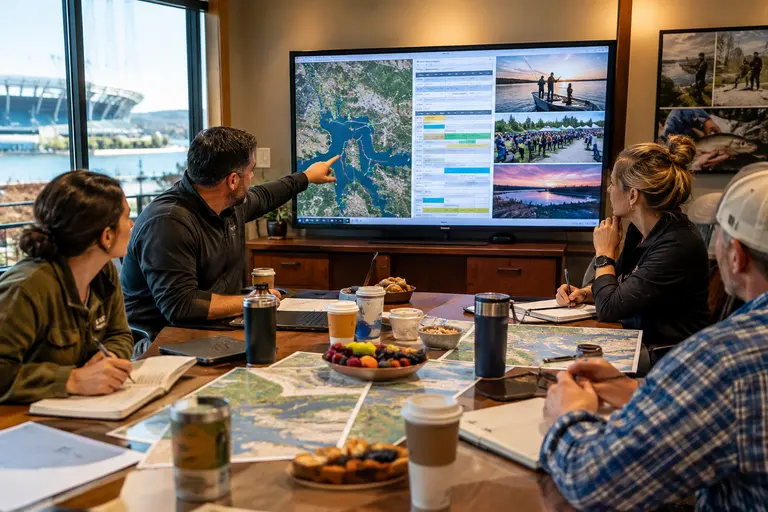
The FAA Ground Stop showed how sports travel depends on more than the listed flight time. A fan flying through Houston, Dallas, Austin, or another connection city had to weigh boarding uncertainty, rental car timing, hotel cancellation rules, ticket transfer options, and whether a game’s start time might move. For community-minded sports travelers comparing car time, meals, and overnight stops, the same trip-planning habits that help outdoors readers of Bass Lake Roadhouse also applied to a disrupted football weekend: build in time, keep backup routes realistic, and treat ground transportation as part of the game plan.
That lesson is familiar to Texas anglers and tournament families, too. A fishing weigh-in, youth sports weekend, or college football road trip can all be affected by the same infrastructure pressure. Airports, highways, hotels, and venue staffs are part of the event experience. When air traffic stalls, the impact reaches people who never boarded a plane because start times, staffing, parking flows, and family schedules all react to the delay.
Officials, Gear, And Venue Timelines Mattered
The travel disruption also affected referees and team equipment across collegiate and professional sports. Research notes showed that some officials and equipment were unable to arrive as scheduled. That is a major operational issue because games need officiating crews, replay or communication support where applicable, medical coverage, equipment access, and venue staffing aligned inside a narrow time window.
The disruption reached beyond Texas. Mississippi’s game against Oklahoma was moved from Saturday, November 14, to Sunday, November 15, at 1 p.m. Eastern time because Ole Miss could not leave Oxford until Saturday afternoon, according to The Washington Post’s sports travel report. That example matters for Texas readers because it showed the same pressure point: if one team cannot reach the site in time to conduct normal game preparation, the schedule may have to move.
For event operators, the weekend reinforced the value of bus options, earlier equipment movement, direct communication with visiting teams, and clear public updates when kickoff windows change. None of those steps removes the disruption, but each can reduce confusion for athletes and fans once the first delay hits.
Why FAA Ground Stop Lessons Matter For Texas Sports
The FAA Ground Stop did not affect every Texas sporting event in the same way. Some games stayed on schedule, some travel plans tightened, and one Houston kickoff shifted later in the day. The pattern was clear: teams with workable backup transportation or enough schedule cushion had a better chance to protect the event window, while fans relying on tight connections carried more risk.
The Texas takeaway from November 13-14, 2026, is practical. Big sports weekends are tied to transportation systems that can change with little warning. Team charters, commercial flights, buses, equipment trucks, officials, and fans all have to reach the same place at the right time. When the air system stopped, Texas sports did not stop entirely, but schedules bent around the disruption. That made the weekend a sharp reminder that travel planning is part of event coverage, not a side note.