
Cold fronts rolling across the Lone Star State each November do more than push largemouth bass into deeper timber and drive waterfowl down the Central Flyway. They also open one of the most accessible freshwater fisheries on the Texas calendar. On November 24, 2026, the Texas Parks and Wildlife Department (TPWD) launched its annual winter rainbow trout stocking season, beginning a multi-month run that will distribute 319,915 rainbow trout into Texas rivers, tailraces, state parks, and neighborhood ponds through March 5, 2027, according to the TPWD November 17 season announcement.
For Texas anglers, winter trout season occupies a distinct niche. Unlike warmwater staples such as largemouth bass, crappie, and channel catfish, rainbow trout cannot survive the summer water temperatures found across most of Texas. That thermal reality turns the state’s winter stockings into a concentrated seasonal fishery built for action. Whether you are a fly angler planning a wade trip below Canyon Lake Dam, a tournament bass competitor looking for a relaxed midweek outing between winter circuits, or a parent introducing a child to their first fish at a city park pond, knowing how the stocking calendar, harvest rules, and local waterbodies work gives you a measurable edge.
How the 2026–2027 TPWD Stocking Schedule Works
TPWD organizes its winter trout distribution across a wide network of public waters spanning every major region of the state, from El Paso and Amarillo to East Texas pineywoods parks and Gulf Coast suburbs. Rather than releasing every fish on a single weekend, state hatcheries stagger deliveries from late November through early March. That cadence keeps fresh fish entering local waters throughout the holiday break and the coldest weeks of January and February.
Timing matters considerably in a put-and-take trout fishery. Stocked rainbow trout often feed aggressively shortly after release, and heavy bank pressure at popular urban ponds can thin out a delivery within days. Checking the official 2026–2027 TPWD Rainbow Trout Stocking Schedule before loading your rods is the single most reliable way to match your trip to a recent drop. TPWD also cautions that listed dates and sites can shift due to inclement weather or hatchery logistics, so confirming a scheduled delivery the morning of your outing is worth the extra minute.
The initial wave of 2026–2027 stockings opened on November 24 at urban lakes across the state, including John Ward Memorial Park South Lake in Amarillo, City Lake Park in Mesquite, Chisholm Park in Hurst, Burke-Crenshaw Lake in Pasadena, Central Park Pond #1 in College Station, Buena Vista Park Lake in Waco, and Bullfrog Pond in Manor. Regional park ponds and state parks follow rapidly in late November and early December, with Blanco State Park #3 slated for November 29, Cal Young Park Lake in Abilene on November 30, and major tailrace deliveries beginning December 3.
Guadalupe River Tailrace and Special Trout Management Zones
While most Texas trout waters function strictly as winter put-and-take fisheries, the Guadalupe River downstream from Canyon Lake Dam stands apart. Cold water discharged from the bottom of Canyon Lake keeps portions of the tailrace cool enough to hold trout well beyond the winter stocking window, making it the southernmost year-round trout fishery in the United States and the flagship destination for Texas fly and light-spin anglers.
TPWD’s 2026–2027 schedule earmarks 18,471 rainbow trout across five Canyon Tailrace stocking sites, with regular deliveries starting December 3, 2026, and continuing on December 10, 17, and 21 before resuming on January 3, 7, 14, 21, and 28, 2027, along with a Troutfest stocking on February 22, 2027. Because this stretch supports larger holdover fish and heavy angling interest, TPWD enforces strict Guadalupe River fishing regulations that differ sharply from statewide trout rules.
Anglers fishing below Canyon Dam must pay close attention to zone boundaries before tying on bait or putting a fish on a stringer. In Trout Zone 1—running from 800 yards downstream of the Canyon Dam release to the east bridge on Highway 306—rainbow and brown trout are managed under a 12-to-18-inch slot limit. Anglers may keep up to five trout per day that measure 12 inches or less, or 18 inches or longer, with no more than one trout 18 inches or longer retained, and harvest is restricted to artificial lures only. In Trout Zone 2—extending from the east Highway 306 bridge downstream to the second crossing on River Road—regulations tighten further to an 18-inch minimum length limit, a one-trout daily bag limit, and artificial lures only. Outside those two designated zones, standard statewide limits apply.
Public access along the Guadalupe tailrace requires planning as well. Guadalupe Park, operated by the U.S. Army Corps of Engineers, provides year-round free public access near the dam. TPWD has also historically partnered with private riverside properties for temporary winter leased access windows, such as Camp Huaco Springs, though anglers should confirm current-season lease dates and parking rules directly through TPWD before assuming free bank entry at private crossings.
Urban Neighborhood Fishin’ Lakes, State Parks, and Regional Waters
You do not need to drive to the Hill Country to find steady winter trout action. Eighteen urban lakes enrolled in the TPWD Neighborhood Fishin’ program receive recurring rainbow trout deliveries from late November into early March, giving metro-area anglers in Dallas-Fort Worth, Houston, Austin, San Antonio, Amarillo, Waco, and College Station close-to-home fishing every few weeks. High-volume sites such as John Ward Memorial Park South Lake in Amarillo (4,424 trout), City Lake Park in Mesquite (3,160 trout), and Burke-Crenshaw Lake in Pasadena (2,400 trout) are built specifically for accessible shoreline fishing, with mowed banks, parking, and restrooms nearby.
Outside the metro centers, major tailraces and regional hubs offer plenty of room to spread out. The Possum Kingdom Tailrace on the Brazos River near Graford is scheduled for 9,000 rainbow trout beginning December 3, 2026, providing moving-water riffles and deeper pools for wading or bank casting in North Central Texas. Farther west, Ascarate Lake in El Paso receives 4,500 trout across three winter drops, while Comanche Trail in Big Spring is slated for 4,000 trout and Comanche Trails Park in Odessa for 3,000. Texas State Parks—including Bob Sandlin State Park in Pittsburg, Garner State Park in Concan, Fort Richardson State Park in Jacksboro, and Blanco State Park—pair scenic winter camping with stocked ponds and river stretches.
| Waterbody / Program | Region / City | 2026–2027 Scheduled Trout | Key Stocking Window | Primary Regulation Note |
| Canyon Tailrace (5 sites, Guadalupe River) | Hill Country (Canyon Lake) | 18,471 | Dec. 3, 2026 – Jan. 28, 2027 (plus Feb. 22 Troutfest) | Special Zone 1 & Zone 2 slot/size limits; artificial lures only in zones |
| Possum Kingdom Tailrace (Brazos River) | North Central (Graford) | 9,000 | Begins Dec. 3, 2026 | Statewide 5-trout daily bag; no minimum length |
| Ascarate Lake | Far West (El Paso) | 4,500 | Dec. 9, 2026; Jan. 6 & Feb. 10, 2027 | Statewide 5-trout daily bag; 2-pole CFL limit |
| Neighborhood Fishin’ Lakes (18 urban sites) | Major Texas Metros | 896 – 4,424 per site | Nov. 24, 2026 – March 5, 2027 | Statewide 5-trout daily bag; 2-pole CFL limit |
| Bob Sandlin & Garner State Parks | East Texas & Hill Country | 2,500 (Bob Sandlin); 2,300 (Garner) | Dec. 2026 – Feb. 2027 | No fishing license required inside park boundaries; park entry fee applies |
Statewide Harvest Rules, Pole Limits, and Free State Park Fishing
Outside the Guadalupe River’s special trout management zones, Texas keeps winter trout regulations straightforward. Statewide rules set no minimum length limit and a daily bag limit of five rainbow trout per angler. In Community Fishing Lakes—which include most municipal park ponds and Neighborhood Fishin’ sites—and on docks, piers, or jetties inside Texas State Parks, anglers are limited to no more than two poles at a time.
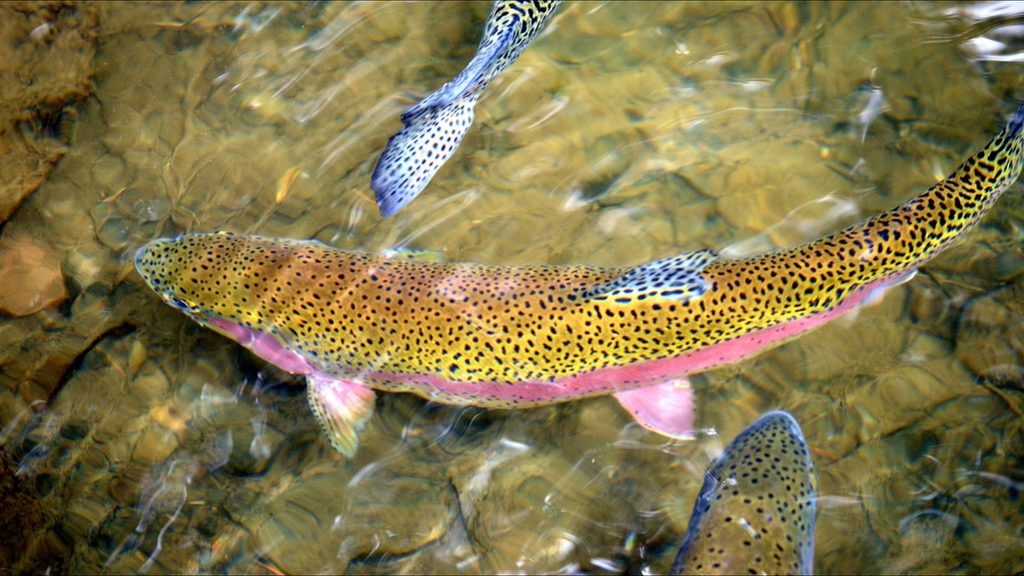
Licensing rules also create an easy entry point for newcomers and visiting family members over the holidays. Youth under 17 years old do not need a fishing license anywhere in Texas. In addition, under TPWD’s Free Fishing in State Parks policy, anyone fishing from the bank, pier, or fully enclosed waters inside more than 70 Texas State Parks is exempt from both fishing license and freshwater endorsement requirements. Standard park entry fees still apply, and all bag, length, and pole limits remain strictly enforced. Many state parks also operate free tackle loaner programs for visitors who do not own light spinning gear. Remember, however, that the state park exemption does not extend to city or county parks; adults 17 and older fishing municipal ponds, Neighborhood Fishin’ lakes, or public river accesses outside state parks must carry a valid Texas fishing license with a freshwater endorsement.
Light-Tackle Setup and Cold-Water Presentations That Produce
Catching stocked rainbow trout does not require heavy bass rods or specialized electronics. In fact, downsizing your line and terminal tackle is usually the fastest way to turn tentative nibbles into consistent hookups. Stocked fish in clear winter ponds and cold tailraces become line-shy quickly after a few days of bank pressure, and oversized hooks or stiff monofilament will cost you bites. Anglers who already keep a dedicated cold-weather kit from our Texas reservoir and river gear checklist only need to add a light spinning outfit or a 4- to 5-weight fly rod to cover virtually every trout water in the state.
- Rod, reel, and line: An ultralight or light-action spinning rod paired with 4-pound monofilament or fluorocarbon casts small baits cleanly and absorbs headshakes without tearing soft trout mouths.
- Natural and dough baits (where legal): In ponds and non-restricted stretches, small #10 to #14 treble or single baitholder hooks tipped with scented trout dough, whole-kernel corn, or small live worms suspended beneath a pencil bobber or floated off the bottom on a light Carolina rig consistently produce limits.
- Compact artificials: Inline spinners (1/16 to 1/8 ounce), micro spoons, and 1/32-ounce marabou jigs shine in clear water and are mandatory inside the Guadalupe River’s artificial-only zones.
- Fly-fishing staples: On the Guadalupe or Possum Kingdom tailraces, dead-drifting small bead-head nymphs, San Juan worms, midges, or egg patterns beneath a strike indicator covers holding seams effectively in cold winter flows.
- Fish-handling essentials: Carry needle-nose pliers for quick releases, a rubber-mesh landing net, and a cooler with ice if you plan to keep your five-fish limit for the skillet.
Water temperature and sun angle dictate daily movement even in small community ponds. On frosty mornings, stocked trout often cruise shallow wind-blown shorelines or sit just off points and drop-offs once the sun warms the upper water column. In moving water below Canyon Dam or Possum Kingdom, focus on current seams—the softer edges bordering faster riffles—and deeper tailouts where trout can hold without burning excess energy.
Planning Your Winter Trout Circuit Across Texas
The beauty of the 2026–2027 Texas rainbow trout season lies in how easily it fits around the rest of the winter outdoor calendar. A morning duck hunt or whitetail sit can transition seamlessly into an afternoon stop at a stocked state park pond, and anglers waiting for spring pre-spawn bass patterns to fire up can stay sharp on light-line hooksets and current reading all winter long.
Before you head out, verify your target waterbody’s latest delivery date on the TPWD schedule, double-check whether special Guadalupe River zone boundaries or Community Fishing Lake two-pole rules apply, and confirm your license or state park day-pass reservation. With 319,915 rainbow trout hitting Texas waters between November 24 and March 5, there is no shortage of cold-water action within an easy drive—provided you time the stockings, fish light, and respect the rules that keep Texas public fisheries thriving.