
Impounded in 1982 along the Frio River basin roughly eighty miles south of San Antonio, Choke Canyon Reservoir remains one of the most formidable and rewarding fisheries on the South Texas tournament trail. Spanning 25,670 surface acres at normal conservation pool elevation of 220.5 feet above mean sea level, this municipal water-supply reservoir for the City of Corpus Christi has forged a storied tournament reputation. Choke Canyon holds an exceptional record of trophy largemouth production, highlighted by a 15.45-pound lake record boated by Brad Bookmyer and thirteen documented Legacy ShareLunkers weighing thirteen pounds or more. However, competing successfully on Choke Canyon requires far more than casting confidence; it demands precise technical execution across severe water level fluctuations, vast expanses of drowned timber, and abrupt seasonal climate shifts typical of McMullen and Live Oak counties.
Unlike East Texas reservoirs where water levels remain relatively stable behind managed river authorities, Choke Canyon functions within a semi-arid watershed characterized by prolonged droughts punctuated by sudden subtropical rain events. Extended periods of low water pull the lake surface fifteen to thirty feet below conservation pool, reducing surface acreage and concentrating fish populations along defined creek beds, main-lake river channels, and relic roadbeds. For competitors preparing their rigs through the Texas tournament calendar and entry guide, navigating Choke Canyon requires a calculated balance between boating safety, high-definition mapping analysis, and targeted bait presentations suited to pressurized bass.
Hydrological Fluctuations and Boat Ramp Logistics in Low-Water Cycles
Managing the physical realities of low water represents the initial hurdle for any tournament team launching at Choke Canyon. Prolonged municipal drawdowns and South Texas evaporation rates alter shoreline geometry, leaving legacy boat ramps high and dry while exposing hazardous boulder piles, submerged fence lines, and fields of petrified mesquite. According to official facility updates from the Texas Parks and Wildlife Department, launch access during severe drawdowns becomes restricted to deep-water facilities, primarily the Calliham Unit within Choke Canyon State Park and select public ramps near the dam.
Navigating the reservoir when the pool sits twenty feet down transforms open water into an intricate obstacle course. Boat operators who run on plane outside designated channel cuts risk catastrophic lower-unit destruction against limestone humps that sit just beneath the surface. Tournament pros rely heavily on satellite imagery layers, historical low-water contour charts, and calibrated forward-facing sonar to trace the inundated Frio River channel, Willow Creek, and Salt Creek. Running off-pad at idle speed through timber-choked bottlenecks is not merely a caution; it is an absolute tactical necessity to ensure anglers reach afternoon weigh-in scales without equipment failure.
These drought cycles, while logistically challenging, create distinct structural advantages for observant anglers. As shallow flats drain, the lake’s abundant forage base—consisting of gizzard shad, threadfin shad, bluegill, and redear sunfish—is compressed into the primary river cuts and steep contour breaks. The largemouth bass follow this forage migration, establishing predictable ambush feeding stations along structural drop-offs where deep river water abuts standing hardwood trunks and submerged rock ledges.
Seasonal Structure Formations: Locating Offshore Timber, Humps, and Hydrilla
Choke Canyon’s aquatic habitat is divided into two distinct biological zones: the stained upper river delta towards the west and the clearer lower basin near the dam. In the lower lake, water clarity often extends to four to six feet, fostering lush offshore beds of hydrilla, coontail, and native pondweed. Tournament patterns in this clear water revolve around the deep grass line, where submerged vegetation terminates along the ten-to-eighteen-foot contour lines. Elite anglers utilize vibrating jigs, swimbaits, and heavy Texas-rigged creature baits punched directly through matted vegetation canopies to trigger reaction strikes from resident giants.
In contrast, the mid-lake and upper river sections feature heavily stained water with visibility rarely exceeding twelve to twenty-four inches. Here, largemouth bass relate almost entirely to vertical timber, root wads, and relic infrastructure. Submerged roadbeds intersecting the old Frio River channel act as primary migratory funnels. Anglers target isolated hardwood trees that stand directly on the lip of channel swings, employing heavy football jigs, deep-diving crankbaits, and Carolina-rigged soft plastics to grind against the hard bottom substrate.
| Lake Section | Primary Structure & Cover | Water Clarity | Top Tournament Presentations |
| Lower Basin / Dam Zone | Hydrilla edges, rock humps, steep bluff walls | Clear (3 to 6 ft visibility) | Punch rigs, vibrating jigs, deep jerkbaits, finesse dropshots |
| Mid-Lake / Calliham Reach | Flooded timber forests, creek channel swings, roadbeds | Slightly Stained (18 to 36 in) | Football jigs, magnum crankbaits, Texas-rigged ribbon-tail worms |
| Upper Frio River Delta | Silt flats, root clusters, laydowns, river bends | Stained / Murky (6 to 18 in) | Squarebill crankbaits, spinnerbaits, bladed jigs, flipping jigs |
Tournament Bait Selection and High-Percentage Presentation Patterns
Achieving a five-fish tournament limit weighing twenty pounds or better at Choke Canyon requires understanding the predatory behavior of mature Florida-strain largemouth. Stocked regularly with Lone Star Bass fingerlings by state fisheries biologists to enhance trophy genetics, these fish are conditioned to track substantial bait profiles. Tournament anglers rarely fish small finesse plastics unless severe post-frontal bluebird skies shut down aggressive feeding windows.
When bass position around deep timber in fifteen to twenty-five feet of water, dragging ten-to-twelve-inch soft plastic ribbon-tail worms in colors like red shad, tequila sunrise, and junebug remains a dominant South Texas standard. The undulating action of an oversized worm displaces sufficient water to draw strikes even in low-light underwater canopies. Concurrently, football jigs weighing 3/4-ounce to 1-ounce paired with bulky craw trailers allow competitors to maintain continuous bottom contact along offshore rock ledges, transmitting the tactile profile of feeding crawfish directly through sensitive graphite blanks.
For shallow-water specialists hunting early morning bags around grass flats and brushy points, topwater walking baits and hollow-body frogs produce explosive morning action. During early autumn and late spring tournament stops, shad school tightly near the surface at daybreak. Burning white-and-chartreuse double-willow spinnerbaits or vibrating bladed jigs along the outer perimeter of hydrilla beds generates savage reaction bites before fish descend into deep cover as the afternoon sun penetrates the water column.
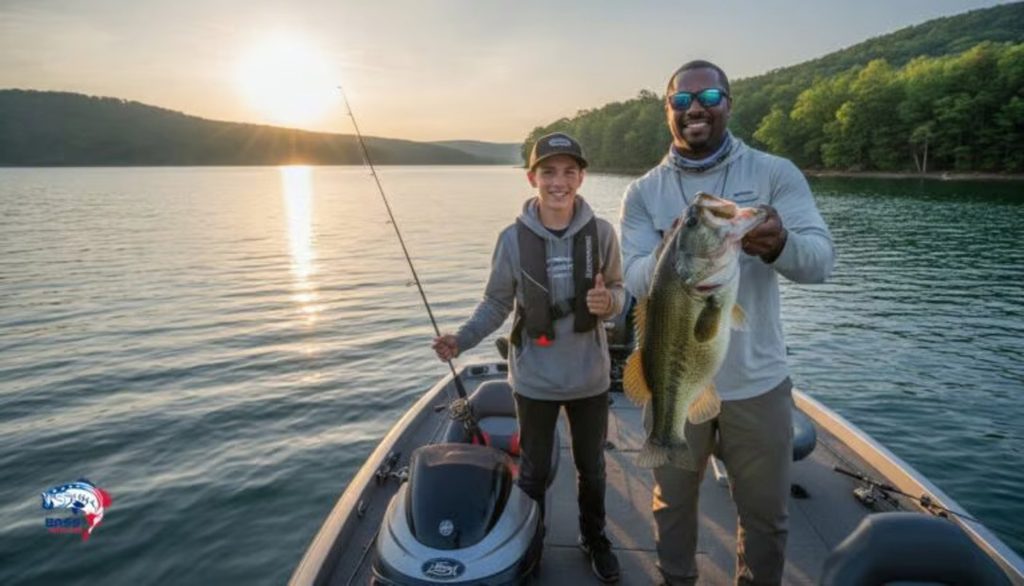
Care, Livewell Management, and Legal Compliance for South Texas Lunkers
Handling trophy bass under grueling South Texas heat demands strict livewell stewardship. With afternoon ambient temperatures frequently exceeding ninety degrees during summer and early autumn events, surface water drawn into livewells can quickly reach lethal temperatures for stressed fish. Competitive tournament organizations enforce rigorous catch-and-release standards, assessing steep quarter-pound to full-pound weight penalties for dead fish presented at the scales.
- Continuous Livewell Oxygenation and Cooling: Anglers must operate livewell aeration pumps continuously rather than relying on automated timer cycles. Adding frozen water bottles to livewell chambers drops ambient water temperature by five to eight degrees, preserving dissolved oxygen saturation levels.
- Catch-and-Release Conditioning Agents: Utilizing approved non-iodized livewell additives restores protective slime coats, reduces metabolic stress, and balances electrolyte levels in largemouth bass subjected to livewell containment throughout an eight-hour tournament day.
- Deep-Water Firing and Venting Protocols: When bass are extracted from depths exceeding twenty feet, sudden pressure changes can cause their swim bladders to expand, leaving fish floating upside down in the livewell. Tournament competitors must be trained in needle fizzing techniques or employ weighted fin clips to stabilize the fish upright until internal barotrauma resolves.
- Clean, Drain, and Dry Compliance: Under Texas Administrative Code enforced by game wardens, all watercraft must be drained of all livewell and bilge water prior to leaving the launch ramp to prevent the spread of invasive species such as giant salvinia and zebra mussels.
Anglers should also note that while Choke Canyon follows statewide regulations for largemouth bass—a five-fish daily bag limit with a 14-inch minimum length limit—any extraordinary catch meeting the 13-pound threshold qualifies for entry into the state’s signature breeding and research initiative administered through the Toyota ShareLunker Program. During the collection window between January and March, certified lunkers are carefully transported to the Texas Freshwater Fisheries Center in Athens to produce future generations of pure Florida-strain fingerlings for restocking across Texas public waters.
Strategic Planning for Choke Canyon Tournament Success
Taming Choke Canyon Reservoir requires complete mastery of situational bass fishing. The anglers who consistently hoist trophies on the weigh-in stage at Calliham are not those locked into a single historical waypoint, but those who read the lake’s current water level, monitor wind-driven bait movements along the Frio River, and adjust presentations as sunlight shifts. By respecting the navigation hazards of this South Texas reservoir, capitalizing on offshore timber channels, and maintaining flawless fish care in the livewell, tournament competitors can unlock the premier bass-fishing potential that Choke Canyon offers.