
When the bitter winter winds sweep across the High Plains of Texas, the agricultural fields of the Panhandle transform into the state’s premier destination for upland bird hunters. The annual Texas pheasant season, traditionally opening the first weekend in December and running for a brief 30-day window, draws dedicated wingshooters seeking the explosive flush of a wild ringneck. For hunters utilizing Texas sportsmen networks to plan their winter trips, navigating this specialized and concentrated hunting season requires an acute understanding of Panhandle agriculture, severe weather patterns, and highly coordinated team tactics.
Unlike the sprawling quail pastures of South Texas, Panhandle pheasant hunting is intensely focused on agricultural infrastructure. The 37-county zone spanning from Lubbock up to the Oklahoma state line operates on a boom-or-bust cycle directly tied to spring rainfall and crop yields. Bagging the daily limit of three roosters demands more than just endurance; it requires hunters to anticipate how late-season pressure alters bird behavior within the massive corn, sorghum, and wheat operations that define the region.
Analyzing the Agricultural Landscape and Pheasant Habitat
The success of the Texas pheasant hatch is inextricably linked to the agricultural practices of the High Plains. While the Texas Parks and Wildlife Department regulates the short season to protect the baseline breeding population, the actual volume of birds heavily depends on the presence of Conservation Reserve Program (CRP) acreage adjacent to active grain fields. These fields provide the crucial nesting cover required during the wet spring months.
By December, the vast majority of corn and milo (sorghum) crops have been harvested. The remaining stubble fields become the primary feeding zones for pheasants. However, the birds do not live in the stubble; they commute there. Understanding this daily commute is the foundation of a successful Panhandle hunt. Pheasants roost in heavy, thick cover—weedy draws, dry playa lakes filled with smartweed, and dense CRP grasses. At first light, they transition to the harvested grain fields to feed, before retreating to the heavy cover or deep irrigation ditches during the midday hours to digest and conserve heat.
The Art of the Push: Coordinated Team Tactics
Wild, late-season ringnecks are notorious runners. Unlike bobwhite quail that often hold tight for a pointing dog, a pressured December pheasant would rather sprint a quarter-mile down a corn row than take to the air. Attempting to hunt a 160-acre pivot irrigation field solo or with a single companion is an exercise in frustration, as the birds will simply run out the opposite end long before you arrive.
To successfully trap running birds, Texas pheasant hunters must execute a coordinated strategy known as “blocking and driving.” This tactic requires a disciplined group of hunters to pinch the birds between two advancing lines.
- The Drivers (The Push): The majority of the hunting party, known as the drivers or pushers, line up horizontally across the targeted field or CRP patch. They advance slowly and methodically, maintaining a strict line to prevent birds from slipping back through gaps. Zigzagging slightly forces hidden birds to make a decision.
- The Blockers: Two or three hunters quietly position themselves at the far end of the field, at the apex of the anticipated escape route. As the drivers push the birds toward the end of the cover, the pheasants run out of runway. Pinched between the advancing drivers and the stationary blockers, the roosters are forced into a flush.
Safety is the absolute priority during a push. All hunters must wear high-visibility blaze orange, maintain visual contact with their adjacent partners, and strictly adhere to safe zones of fire. Shots are never taken low across the horizon, ensuring the safety of the advancing blockers and working dogs.
Weather Variables: Hunting the Panhandle Extremes
The Texas Panhandle in December is unforgiving. Hunters can experience a 60-degree bluebird afternoon on Saturday and a blinding snowstorm with sub-zero wind chills on Sunday. Pheasant behavior shifts radically in response to these severe barometric swings.
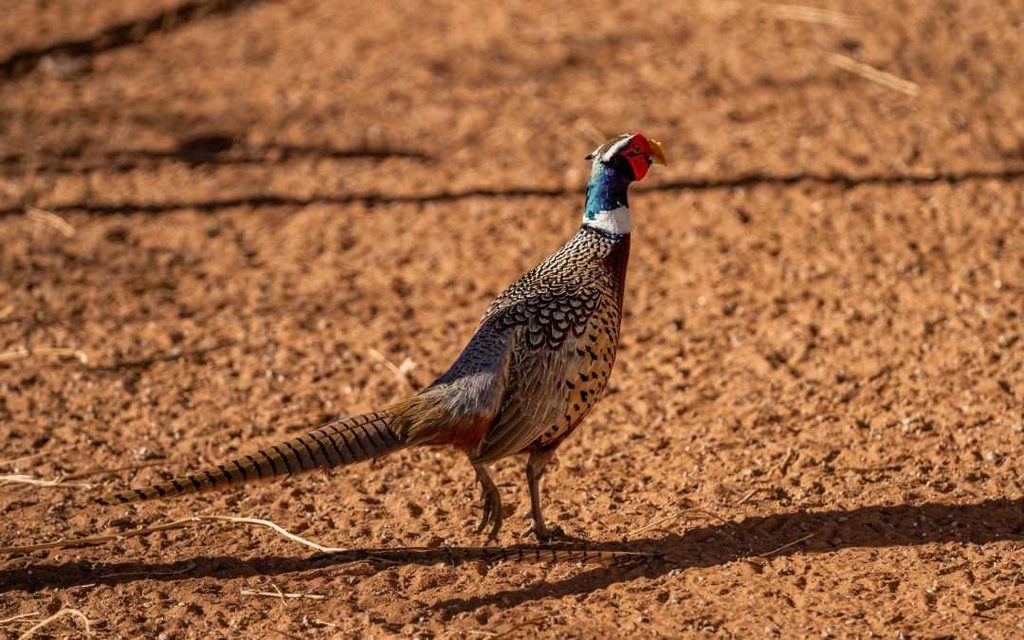
During mild, sunny weather, birds are scattered. They will confidently feed in sparse stubble and hold relatively well in moderate cover. However, when a harsh northern cold front hits, plunging temperatures and driving snow across the plains, pheasants seek the thickest, most impenetrable thermal cover available to survive. During these severe winter events, hunters should abandon the open agricultural fields and focus entirely on deep, weed-choked playa lake bottoms, thick cattail sloughs, and dense plum thickets bordering fence lines. Birds will pack tightly into these thermal refuges and often hold much tighter, offering excellent close-quarters flushing opportunities for those willing to brave the elements.
| Weather Condition | Pheasant Location | Optimal Hunting Strategy |
| Mild / Sunny (45°F+) | Scattered in light CRP and harvested grain stubble. | Wide, coordinated drives across large agricultural sections. |
| High Winds (25mph+) | Deep irrigation ditches, leeward side of shelterbelts. | Focus heavily on windbreaks and deep depressions; hunt with the wind in your face to slow flushing birds. |
| Severe Cold / Snow | Thickest thermal cover: playa lakes, cattails, plum thickets. | Slow, meticulous dog work in heavy cover; birds will hold tight to conserve body heat. |
Canine Companions: The Value of a Versatile Dog
While it is possible to hunt pheasants without a dog by utilizing the blocking-and-driving method, employing a well-trained bird dog exponentially increases both success rates and bird recovery. The debate between flushing breeds (like Labrador Retrievers and English Springer Spaniels) and pointing breeds (like German Shorthaired Pointers and English Pointers) is a longstanding tradition in Texas pheasant camps.
For late-season Panhandle ringnecks that are prone to running, a hard-charging flushing dog is often considered the superior tool. A seasoned Lab or Springer will dive into the thickest tumbleweeds and cattails, aggressively forcing a running rooster into the air before it can escape the drive. Furthermore, a wild pheasant can absorb an incredible amount of lead and still hit the ground running. A retriever with a strong nose is absolutely essential for tracking and recovering a wounded bird in dense CRP grass, ensuring ethical harvests and preventing lost game.
Conservation and the Future of Texas Pheasants
The short, 30-day December season is a carefully calculated management tool. Because hunters are legally restricted to harvesting only male birds (roosters), the reproductive capacity of the population remains protected. A single surviving rooster can breed with a harem of up to a dozen hens the following spring.
However, the long-term viability of the Texas pheasant population faces continuous threats from prolonged droughts and the reduction of federally enrolled CRP acreage, which converts essential nesting habitat back into sterile, tilled farmland. Organizations dedicated to upland conservation work tirelessly to incentivize farmers to maintain buffer strips and playa lake borders. For the Texas wingshooter, purchasing the required upland game bird endorsement directly funds these vital habitat initiatives, ensuring that the heart-stopping cackle of a flushing ringneck remains a cherished December tradition on the High Plains.