
The annual opening of dove season serves as an unofficial statewide holiday in Texas. Each September, hundreds of thousands of hunters flood sunflower fields, grain sorghum patches, and rural watering holes, marking the highly anticipated start of the fall hunting calendar. While the Texas Parks and Wildlife Department consistently manages robust migratory bird populations, securing a daily bag limit requires more than simply standing in a field and waiting for the flight. For wingshooters relying on Texas bird hunting resources, success in the heavily pressured Central Zone demands a tactical approach to scouting, weather patterns, and decoy placement.
The Central Zone stretches from the Dallas-Fort Worth metroplex down through Austin and San Antonio, ending just short of the coastal plains. This geographic corridor acts as a massive funnel for mourning doves migrating south ahead of autumn cold fronts, while simultaneously supporting a thriving population of resident white-winged doves. Navigating this zone effectively means adjusting to shifting food sources and intense early-season hunting pressure.
Scouting the Essential Triangle: Food, Water, and Roost
Doves operate on a highly predictable daily routine driven by the essential biological triangle of food, water, and roosting cover. Identifying how local flocks utilize these three components dictates where you should position your shooting station. Early season scouting should occur during the crucial transition periods: the first two hours of daylight and the final three hours before sunset.
Food sources change rapidly as agricultural harvesting progresses across the Central Zone. In early September, harvested grain sorghum (milo) and mature native sunflowers are magnet locations for foraging flocks. As the season progresses into October and November, doves shift their attention to harvested cornfields and winter wheat plots. However, identifying a food source is only the first step. Doves prefer bare dirt between rows or plants, allowing them to land and forage easily without fighting heavy ground vegetation.
Water sources offer the most concentrated shooting opportunities during the hot, arid afternoons typical of early September. Because doves prefer clear, shallow banks free of tall grass, livestock tanks with exposed mudflats or gently sloping gravel shorelines are ideal ambush points. Flocks generally water immediately after feeding in the late afternoon before heading to their roosting timber. Positioning yourself along the flight line between a feeding field and a watering tank often yields the most consistent action.
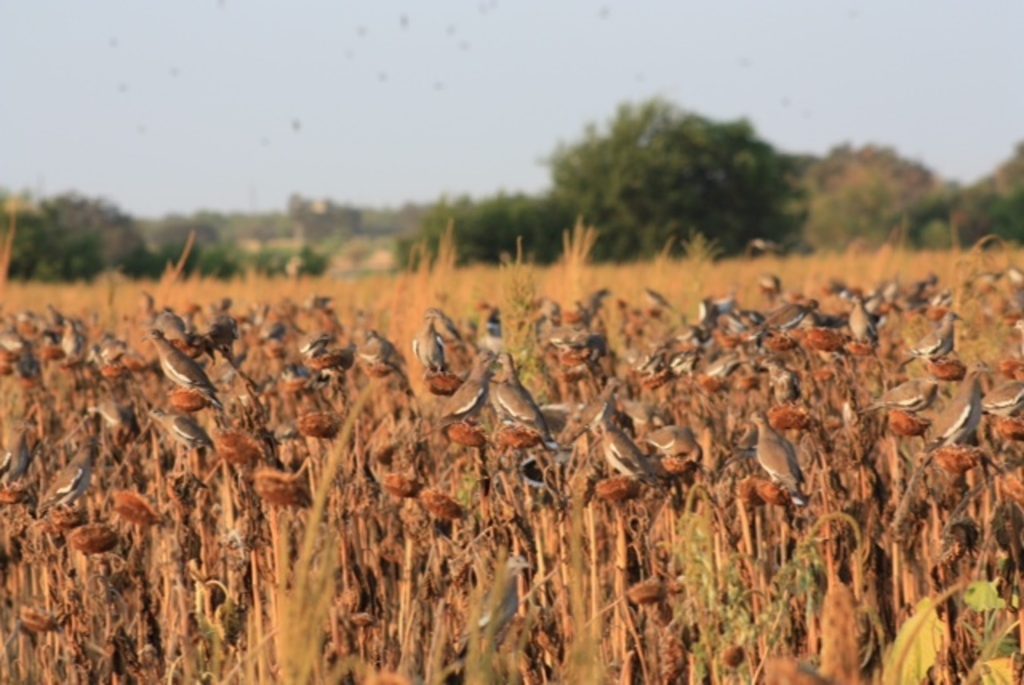
Adapting to Migratory and Resident Dove Behavior
The Central Zone hosts two primary target species: the mourning dove and the white-winged dove, each exhibiting distinct flight patterns and behavioral tendencies. Understanding these differences directly influences your choke selection, lead calculation, and decoy setup.
- Mourning Doves: These birds are the acrobats of the sky. Mourning doves fly erratically, frequently darting, diving, and changing altitude with tailwinds. They typically travel in smaller groups or pairs, skimming the tops of mesquite trees or following natural topography like creek beds and fence lines. Due to their speed and unpredictable flight, hunters often rely on modified or improved cylinder chokes to maximize pattern spread at medium ranges.
- White-Winged Doves: White-wings are significantly larger and tend to fly in structured, high-altitude flocks, resembling a miniature waterfowl migration. They are less prone to erratic diving and maintain a steadier, albeit deceptively fast, flight path. Because white-wings often fly higher and absorb more shot, utilizing a modified or even full choke with heavier shot sizes, such as #7.5 or #6, is recommended when targeting these high-fliers near urban roosts in San Antonio or Austin.
Decoy Placement and Movement Strategies
While doves are not as meticulously cautious as late-season mallards, the strategic use of decoys significantly improves the likelihood of pulling high-flying birds into shotgun range, particularly on heavily hunted public lands or high-traffic leases.
Motion is the most critical element of a dove decoy spread. Spinning-wing decoys (frequently referred to as “mojos”) exploit the dove’s visual reliance on the flashing wings of feeding birds to locate safe foraging areas. Placing one or two motorized decoys in an open, highly visible area of a field provides the initial draw.
However, motion decoys should be supplemented with static decoys to create a realistic feeding scenario. Clip static decoys to the upper branches of dead trees (snags) or along a barbed-wire fence line near the shooting station. Doves naturally seek out elevated vantage points to survey a field before committing to the ground. By placing decoys in these prominent resting spots, you simulate a relaxed, safe environment that encourages incoming flocks to slow down and drop altitude.
Weather Fronts and the Late Season Push
Early September opening weekends are notoriously hot, forcing hunters to endure triple-digit heat indexes. During these periods, early morning and late evening flights are highly condensed, with birds seeking shade during the midday hours. However, the true migration within the Central Zone is triggered by the arrival of the first significant autumn cold fronts in late September and October.
When a strong northern front pushes across the Texas plains, it acts as a conveyor belt, sweeping massive flocks of northern mourning doves into the state. The 48 hours immediately preceding a front often produce frenzied feeding activity as birds gorge themselves in preparation for dropping temperatures. Conversely, the high-pressure, bluebird days immediately following a front can deliver spectacular shooting as new, unpressured migratory birds arrive and search for unfamiliar food and water sources.
| Weather Condition | Dove Behavior | Optimal Hunting Strategy |
| Early Season Heat (95°F+) | Condensed feeding windows at dawn/dusk; midday resting in heavy shade. | Focus heavily on evening water holes; hunt shaded tree lines near feeding fields. |
| Pre-Front (Falling Barometer) | Aggressive, extended foraging periods to build caloric reserves. | Set up on primary grain fields and native sunflowers; utilize motion decoys heavily. |
| Post-Front (High Pressure/Wind) | New migratory birds arriving; lower flight paths fighting headwinds. | Position with the wind at your back to intercept low-flying birds entering fields. |
Conservation and Field Etiquette
Participating in the Texas dove season carries an inherent responsibility to practice ethical hunting and support ongoing conservation efforts. Proper field etiquette ensures safety and maintains the quality of the hunting experience for everyone sharing the field. This includes strictly observing shooting lanes, never firing at low-flying birds near the horizon (often referred to as “ground-swiping”), and diligently retrieving every downed bird.
Furthermore, hunters must adhere strictly to the daily bag limit—which is traditionally 15 birds in the aggregate for the Central Zone—and possess the required migratory game bird endorsement and Harvest Information Program (HIP) certification. By respecting the resource and mastering the tactical nuances of the Central Zone flight paths, Texas sportsmen ensure the enduring legacy of the state’s premier wingshooting tradition.