
Redfish Cup Port Aransas wrapped up on November 8, 2026, with a result that fit the venue: a tight, technical redfish tournament decided by slot-fish discipline, grass-flat execution, and the ability to make good casts in difficult weather. Port Aransas hosted the 2026 Yamaha Bassmaster Redfish Cup Championship presented by Skeeter from November 6-8, marking the event’s fourth trip to the city in six years after prior stops in 2021, 2022, and 2025, according to Bassmaster. For anglers across Texas, the event gave a clear look at how tournament redfish fishing rewards control more than chance.
Redfish Cup Port Aransas Results
Redfish Cup Port Aransas Scoreline
Yamaha pros Easton Fothergill and Clark Jordan Jr. won the championship with a three-day total of 42 pounds. Their daily weights showed why steady execution mattered: 15 pounds, 6 ounces on Day 1, 13-13 on Day 2, and 12-13 on Day 3. They beat runners-up Mike Lauer and Jesse Craddock by 4 pounds, 1 ounce, while working through difficult weather and a field built for high-level inshore decision-making, as reported by Yamaha Outboards.
That winning margin was large enough to show separation, but the daily weights tell a more useful fishing story. Fothergill and Jordan did not need one wild swing to control the event. They produced in all three rounds, kept legal fish coming to the scales, and avoided the kind of mistake that can sink a redfish team when every team is weighing only two fish per day.
How The Field Was Built
The 2026 field included 10 two-angler teams. Six teams were made up of two redfish pros, while four hybrid teams paired a redfish pro with a Bassmaster Elite Series angler. That format matters because it mixes coastal redfish specialists with bass anglers who bring tournament instincts from another discipline: boat positioning, pattern management, casting accuracy, and pressure handling.
Daily takeoffs were scheduled for 6:45 a.m. CT, and weigh-ins were set for 2:45 p.m. CT. Each team’s task was straightforward on paper: bring in two legal Texas slot redfish per day. In practice, that format puts a premium on judging fish, staying within the 20- to 28-inch slot, and finding upper-slot redfish without drifting into over-slot trouble.
Why The Winning Pattern Held Up
Grass Flats And Controlled Casts
The winning strategy centered on drifting long, controlled casts across grass flats in 2 to 4 feet of water in Laguna Madre, especially south of Port Aransas. That is tournament redfishing at its most disciplined. A team has to cover water, but not so fast that it burns through fish or misses the best lanes. It also has to read wind, bottom composition, grass, and potholes while keeping casts in front of fish that may not give many second chances.
Fothergill and Jordan used Berkley Ripple Mullets rigged on 1/4-ounce jigheads. Most bites came over grass, while sandy potholes remained part of the target zone when they were within reach. That setup makes sense for the water described in the research: a lure with profile and movement, matched to a jighead light enough to work over shallow grass while still giving the angler control during long casts.
Slot Fish Management
Redfish tournaments in Texas often come down to slot management. Teams want fish close to 28 inches because larger legal fish carry more weight, but anything just over 28 inches does not count. That makes fish judgment as important as hooksets. A redfish that looks like a winner on the water can become a problem at the measuring board if it crosses the line.
The research notes that anglers focused on slot fish between 20 and 28 inches, with high-slot fish valued heavily. It also notes that an over-slot fish on the final day in 2025 did not count. That prior example is a reminder for any tournament team: the most impressive fish is not always the right fish. Legal precision is part of winning strategy.
Community Impact Around Port Aransas
A Repeat Host With Angling Credibility
Port Aransas had more than a scenic backdrop working in its favor. The Texas Legislature designated the city as the Fishing Capital of Texas in 2025, and the event’s return for the fourth time in six years showed that organizers continued to trust the fishery, the launch logistics, and the local support base. For a coastal town built around access to water, that repeat selection carried real community weight.
The venue also gave anglers a wide range of strategic choices. Research notes the region’s mix of Laguna Madre grass flats, estuaries influenced by the Guadalupe and Nueces rivers, oyster bars, spoils, and mangrove edges. That variety matters in a championship setting because it prevents the event from becoming a single-spot shootout. Teams had to decide whether to commit, adjust, or search based on weather, water, and fish size.
What The Weekend Meant Locally
No specific economic figure for the 2026 tournament was provided in the research. Still, the community impact was visible through the event structure itself: teams, staff, media, families, and spectators all needed lodging, meals, marina access, fuel, and local services during the November 6-8 competition window. Port Aransas’ local fishing economy is built for that kind of traffic, from charter captains and tackle shops to restaurants and waterfront businesses.
For local anglers, the value was not only visitor spending. A national redfish event puts local habitat, local skill, and local access points in front of a wider fishing audience. That attention can help guide services, marinas, and tourism partners, while also reminding residents that healthy flats and responsible slot-limit fishing support both recreation and business.
Community readers who track Texas coastal events can compare this result with our earlier Port Aransas championship setup, which covered the venue context before the final weights were known. For a broader scope of regional exploration, WikiApp offers insights and connections beyond just tournament updates.
Takeaways For Texas Redfish Anglers
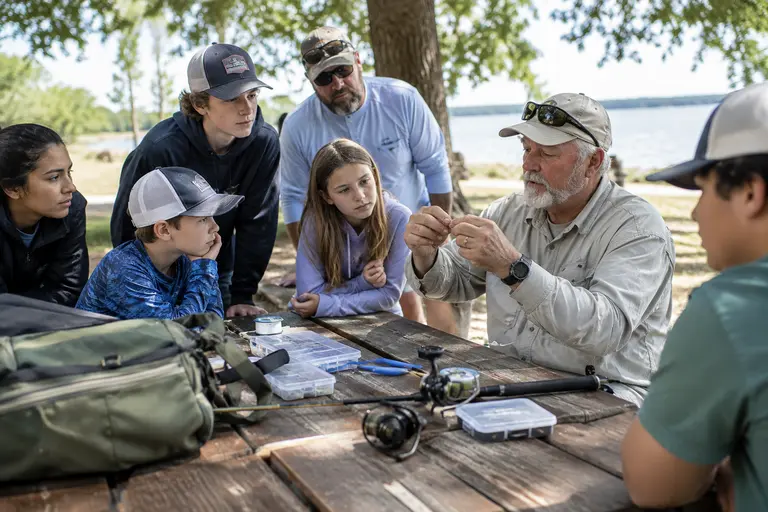
Tournament Lessons For Weekend Crews
The Redfish Cup Port Aransas result offered practical lessons for everyday Texas anglers. First, grass flats in 2 to 4 feet can produce when anglers cover them with purpose instead of random casting. Second, sandy potholes inside grass are worth attention because they create contrast and ambush edges. Third, lure weight matters. A 1/4-ounce jighead is heavy enough for cast control but still suited to shallow grass when paired with the right soft plastic.
The other lesson is patience. Drifting long casts across flats is not the same as racing from shoreline to shoreline. It is a controlled search. Anglers have to let the boat, wind, and lure work together. That is especially true around Port Aransas, where wind can help cover water but can also push a boat out of position if a crew is not paying attention.
Pressure, Weather, And Decision-Making
Difficult weather was part of the winning story, and that is familiar to anyone who fishes the Texas coast in November. Weather does not remove the need for precision; it raises the cost of poor decisions. A missed drift, a rushed cast, or a borderline fish can matter more when bites are not easy.
For tournament teams, that means planning areas that can handle wind direction and water movement. For weekend anglers, it means building a Plan B before leaving the dock. If a flat is too dirty or too exposed, nearby spoils, protected grass, or pothole lines may offer a better setup. The winning pattern showed that execution and adjustment can sit side by side.
What Redfish Cup Port Aransas Proved
Redfish Cup Port Aransas proved that Port Aransas remains a strong championship venue because it pairs fishable habitat with community support and tournament-ready infrastructure. The 2026 event ended with Fothergill and Jordan on top, but the larger takeaway reaches beyond one team. The fishery rewarded legal precision, shallow-water skill, and smart use of Laguna Madre grass flats.
For Texas redfish anglers, the event was a useful case study. The winning team did not rely on mystery. They found the right depth, used a repeatable lure setup, made controlled casts, and managed the slot. That is the kind of approach local anglers can learn from without needing a pro-level setup. Port Aransas once again showed why competitive redfish fishing fits the Coastal Bend: the water is demanding, the community understands the sport, and the best teams still have to earn every pound.